Scoliosis Surgery
Scoliosis surgery is performed to correct abnormal lateral curvature of the spine that progresses despite conservative management. Severe spinal curvature can affect posture, balance, and in some cases respiratory or neurological function. Scoliosis surgery focuses on improving spinal alignment, stabilizing the curvature, and preventing further progression.
Understanding Scoliosis Surgery
Scoliosis surgery aims to realign the spine and maintain correction through internal stabilization. Surgical planning is based on curvature severity, spinal flexibility, patient age, and functional impact. The procedure is typically recommended when spinal curvature continues to progress or causes significant structural imbalance.
Who May Be Considered for Surgery
- Patients with progressive spinal curvature
- Individuals with moderate to severe scoliosis affecting posture or balance
- Patients experiencing pain or functional limitations due to spinal deformity
- People with curvature impacting internal organ function
- Those unresponsive to bracing or non-surgical management
Expected Goals of Scoliosis Surgery
- Correction of abnormal spinal curvature
- Improved spinal balance and alignment
- Prevention of further curve progression
- Reduction of deformity-related discomfort
- Improved long-term spinal stability
Scoliosis Surgery Cost in South Korea
South Korea offers advanced scoliosis correction procedures using modern fixation systems and surgical planning techniques.
Estimated cost ranges may include:
- Scoliosis Correction and Fusion Surgery: $20,000–$45,000 USD
- Advanced Imaging and Surgical Planning: $500–$1,500 USD
- Hospitalization and Surgical Care: Variable depending on curve severity
- Postoperative Rehabilitation: $40–$150 USD per session
Costs depend on curve magnitude, number of fused levels, and surgical complexity.
Key Points Before Surgery
- Surgery permanently stabilizes the corrected spinal segments
- Early evaluation helps prevent severe deformity progression
- Recovery may require extended rehabilitation
- Long-term follow-up is essential to maintain correction
Common Techniques Used in Scoliosis Surgery
1. Posterior Spinal Fusion for Deformity Correction
Corrects spinal curvature using rods, screws, and controlled alignment techniques.
2. Multi-Level Instrumentation and Stabilization
Multiple vertebral levels are stabilized to maintain long-term spinal balance.
3. Intraoperative Neurological Monitoring
Continuous monitoring protects spinal cord and nerve function during correction.
4. Curve-Specific Surgical Planning
Surgical strategy is tailored to curvature type, flexibility, and alignment goals.
5. Postural Balance and Alignment Restoration
Focuses on achieving proper sagittal and coronal spinal balance.
Medical Professionals Involved
Scoliosis surgery is performed by orthopedic spine surgeons or neurosurgeons specializing in spinal deformity correction. The multidisciplinary team includes anesthesiologists, rehabilitation physicians, physical therapists, and neurological monitoring specialists.
International Patient Information
Many spine deformity centers in South Korea provide comprehensive support for international patients undergoing scoliosis surgery.
- English-speaking medical coordinators
- Pre-arrival imaging review and surgical planning
- Coordinated scheduling for surgery and extended hospitalization
- Postoperative rehabilitation planning
- Long-term follow-up guidance after discharge
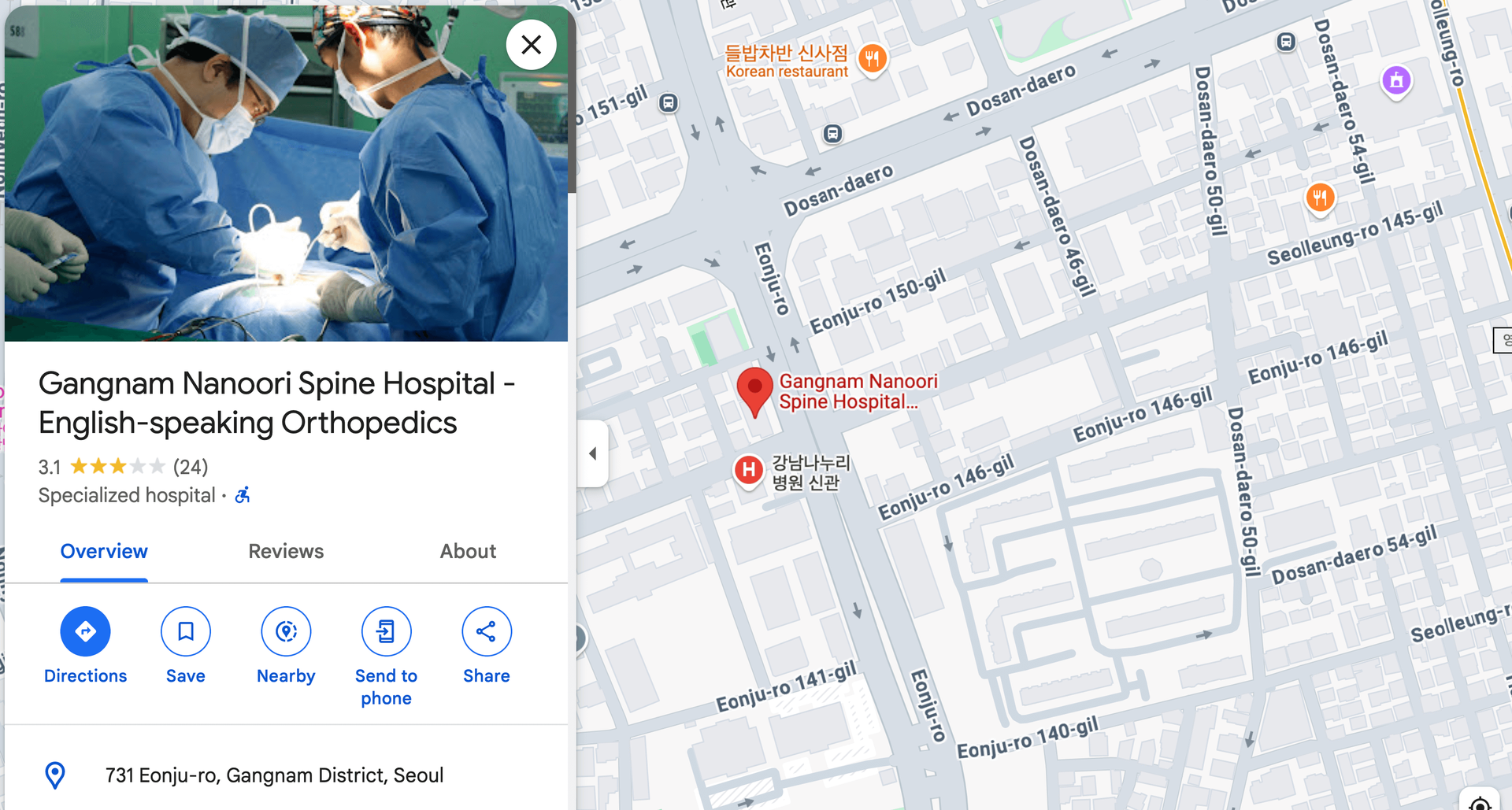
Welcome to Gangnam Nanoori Hospital
Gangnam Nanoori Hospital is a leading international center for spine and joint care, providing world-class medical services to patients from all over the globe. As one of Korea's premier spine and joint hospitals, we are dedicated to diagnosing, treating, and managing various spinal and joint conditions with advanced, patient-centered care.
Our team of board-certified specialists and surgeons offers comprehensive treatment plans tailored to your needs, whether you're dealing with chronic back pain, joint issues, or the need for minimally invasive surgery. We utilize cutting-edge technology and evidence-based practices to ensure the best possible outcomes for our patients.